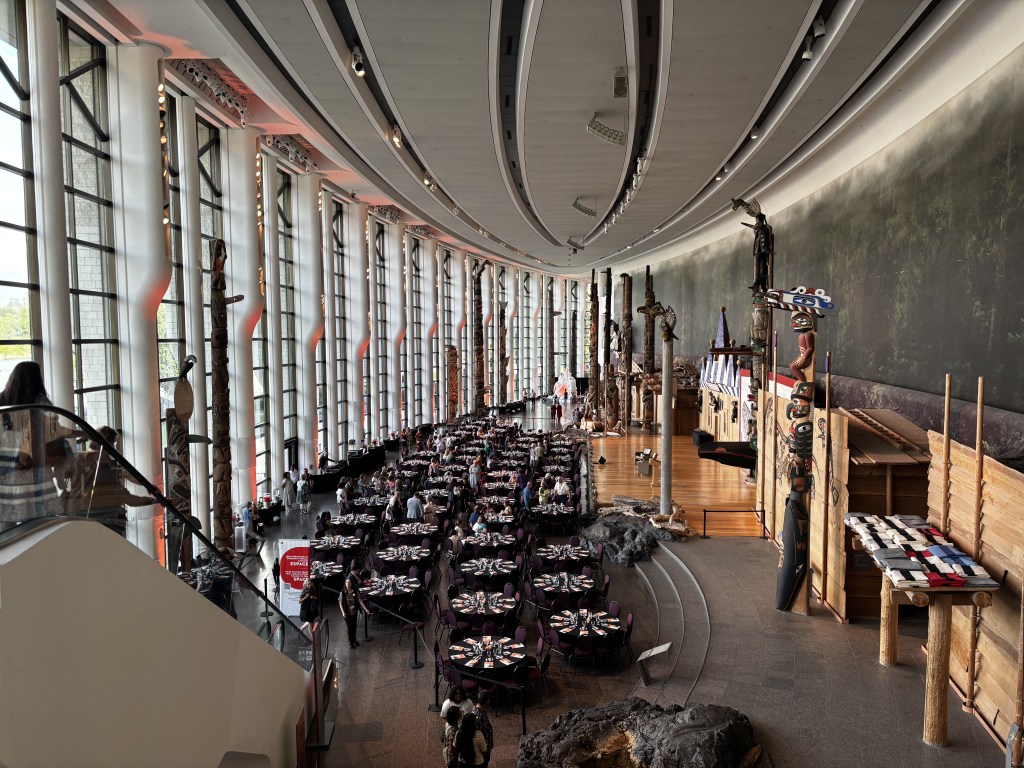
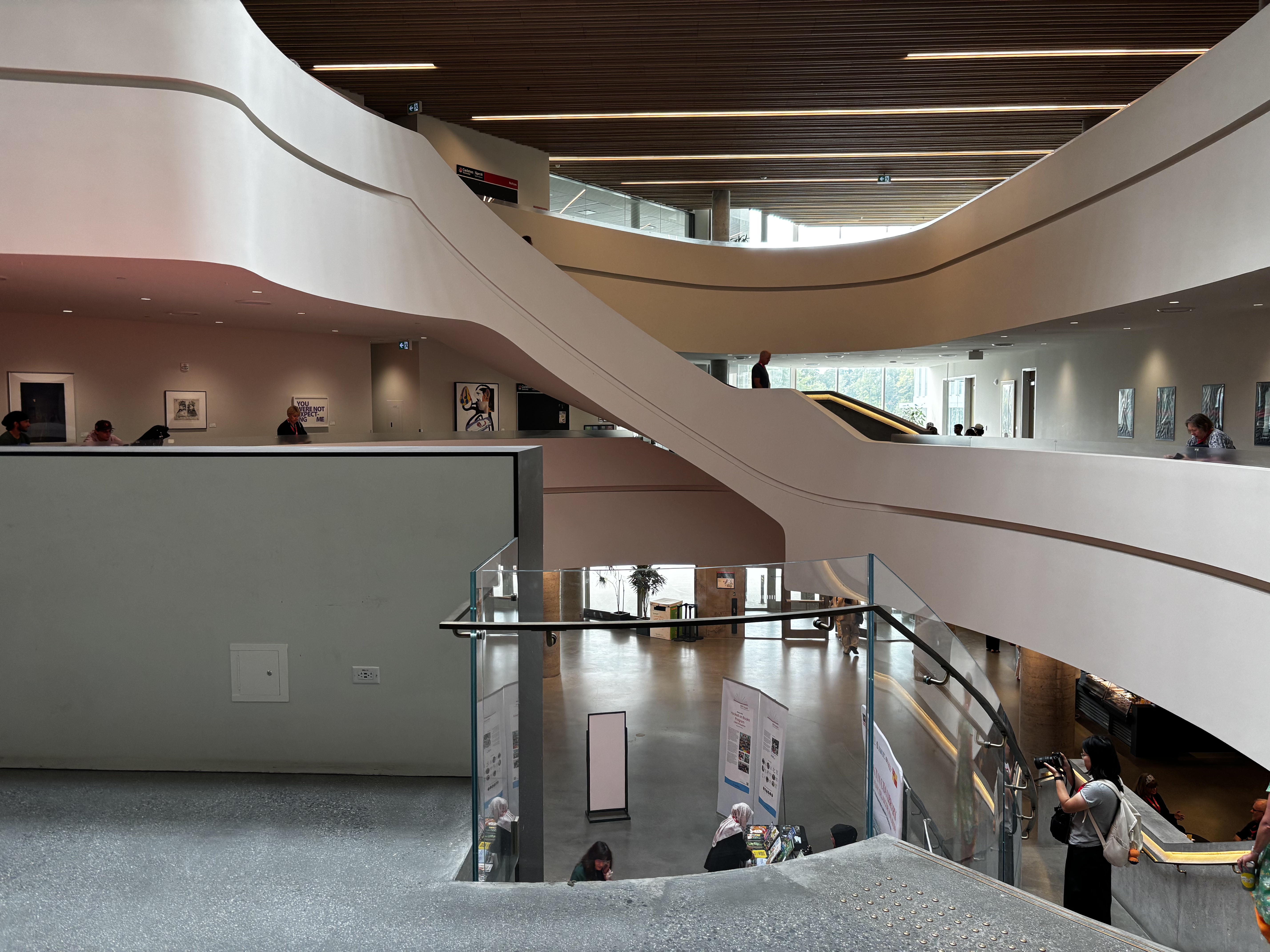
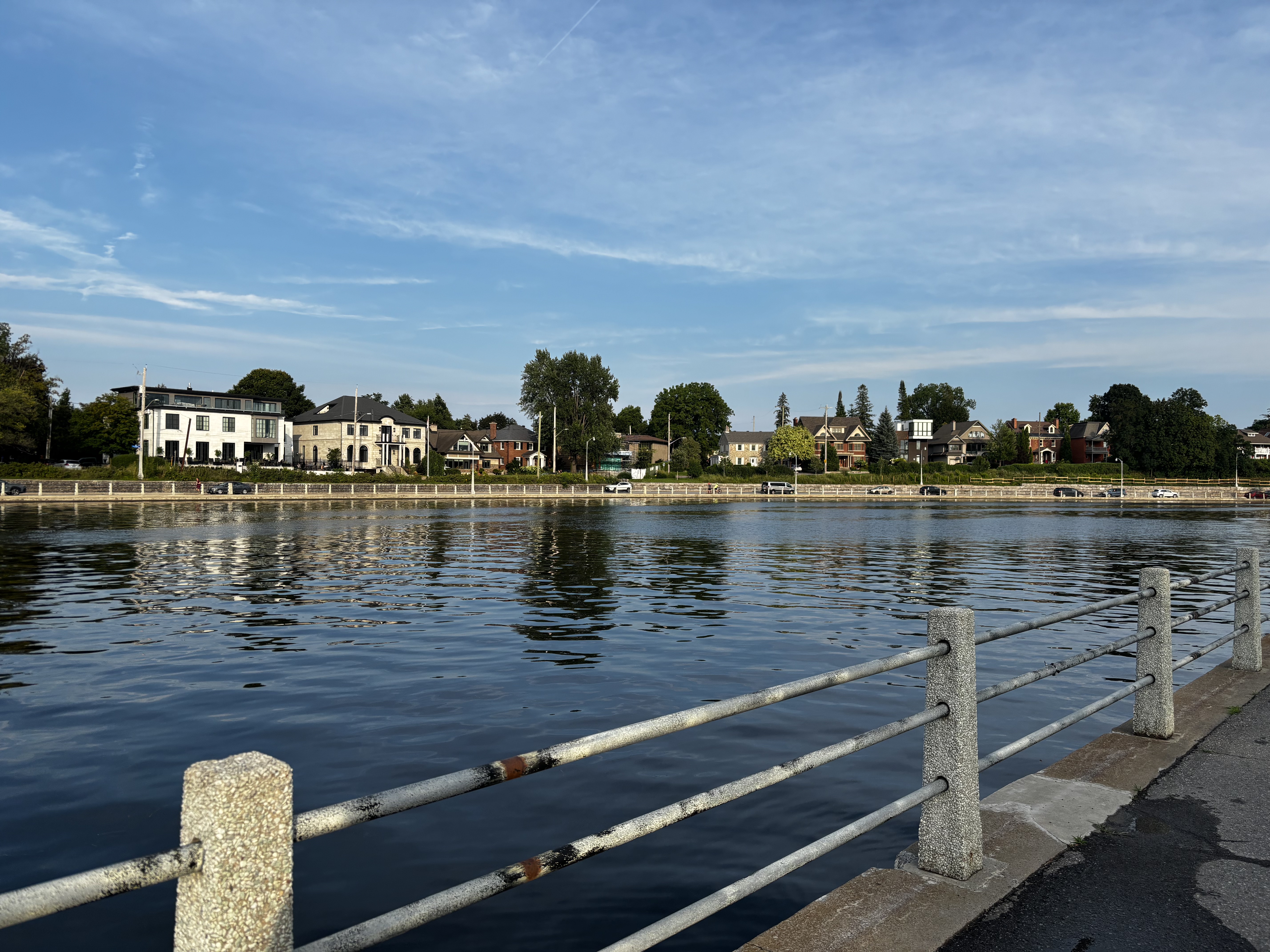
Last week, I spent four days in Ottawa for the 2026 IBBY World Congress, surrounded by people who believe, perhaps more deeply than anyone, in the power of books to shape childhood.
IBBY (the International Board on Books for Young People) brings together writers, illustrators, publishers, librarians, researchers, educators and advocates from around the world.
The congress offered a fascinating glimpse into what is happening in children’s literature internationally, but more importantly, it returned again and again to a fundamental question:
What can stories do for children living in a complicated world?
The answer, I came away thinking, is almost everything.
They can offer recognition.
Preserve memory.
Create empathy.
They can help children imagine a different future.
And sometimes, they can simply give a child the extraordinary feeling of seeing themselves inside a book.



Children’s literature in a changing world
One of the first sessions I attended looked at how much children’s literature has changed. And how many of the questions we thought might have been settled continue to follow us.
A session on Bookbird examined themes including war and peace, controversial literature, nonfiction, digital reading and picture books.
The fact that children’s books about war continue to be published is, unfortunately, as relevant today as it has ever been.
At the same time, the questions surrounding technology remain remarkably familiar. Will computers replace books? What happens to reading in a digital age?
The answer seems less like replacement than expansion. Children now encounter stories through apps, digital libraries, audiobooks, YouTube read-alouds and other platforms.
The International Children’s Digital Library, for example, offers books in dozens of languages, making literature accessible to children who might otherwise have very little access to books in their own language.
But technology hasn’t changed one fundamental thing: children still need stories.
There was also a fascinating discussion about nonfiction and its continuing evolution.
Narrative techniques, humour and blended genres are making informational books increasingly compelling, particularly for children who may not identify as enthusiastic readers but have a strong curiosity about the world.
And then there are the books that test the boundaries of what adults think children should be allowed to read.
Discussions of controversial children’s literature touched on family violence, death, murder, censorship and taboo.
What is considered acceptable varies enormously across cultures. In some countries, subjects that might be considered too difficult elsewhere are approached directly.
The question is not simply What should children read?
It is also: Who gets to decide what children are ready to know?
Migration, memory and belonging
Perhaps the sessions that stayed with me most were those examining immigration and diaspora.
Fengxia Tan’s presentation explored Asian American children’s literature and the ways stories can help children reconstruct identity.
Works by Laurence Yep, Fran Chin, Lisa Yee, Tae Keller, Shirley Marr, Grace Lin and Erin Entrada Kelly demonstrate how migration can be explored through family histories, food, memory and the complicated process of belonging between cultures.
Cross-cultural children’s literature is not simply a “minority narrative.”
It is essential literature for all children because all children need opportunities to understand lives and experiences beyond their own.
Maryam Mohammadkhani explored similar questions in her presentation on Iranian diaspora picture books. How do creators rearticulate memories of a homeland? And how does that process create new forms of belonging?
Children’s books, she reminded us, are never just stories. They are places where children begin to understand the world around them.
Books can allow us to watch from a distance. They can tell us that someone else’s story matters. They can become acts of resistance and love.
This is particularly powerful for children whose families have experienced displacement.
In Saffron Ice Cream, by Rashin Kheiriyeh, longing for a distant homeland becomes part of a child’s experience. In the work of Naseem Hrab, memory and displacement similarly become ways of exploring home.
And perhaps this is one of literature’s greatest gifts to immigrant children: the possibility of having more than one place inside you.
When war enters childhood
War was a recurring theme throughout the congress.
Marsha Skrypuch spoke about historical fiction, cultural appropriation and the responsibility of allowing people to tell their own stories.
She spoke movingly about children responding to books with the words: you see me.
Because sometimes representation is not about providing an answer. It is about making someone visible.
Another presentation focused on the work of the UAE Board on Books for Young People and its Kan Yama Kan initiative — a project built around children’s literature and libraries for children affected by displacement and war.
The numbers are staggering: more than 120 million people are displaced around the world, with children disproportionately affected.
For a child who has lost their home, friends, school, possessions and familiar surroundings, a book can provide something that feels deceptively simple: continuity.
The initiative has established and supported children’s libraries in refugee camps and communities across countries including Jordan, Greece, India, Egypt, South Africa, Lebanon and South Korea. One project, the Big Heart Library in a Syrian refugee camp in Jordan, became the camp’s first and only children’s library.
Thousands of books were donated.
The principle behind the work is simple: Every child deserves access to stories.
And sometimes books can do something even more specific.
Bibliotherapy — the use of books to help people process difficult experiences — recognizes that stories can offer children a safe way into subjects they cannot yet discuss directly.
One workshop described by Hooria Liebold-Rezaei demonstrated exactly this.
Children living through crisis participated in six sessions built around a humorous book about a giraffe-dwelling writer. The story gradually moved toward displacement and war, eventually ending with the giraffe’s house being bombed.
The children were never required to talk directly about war.
Instead, they rewrote the ending.
In their versions, the house might be damaged, but the friendships remained.
The story gives children a way to say what they may not yet be able to say about themselves.
The stories that were missing
This idea of representation came through especially powerfully in David Robertson’s keynote, “Reconciliation as a Way of Building Community.”
In one of the most emotional moments of the congress, Dave (as he told us to call him) spoke about the ways stories weave us together.
He spoke about growing up without a connection to the Cree language. His father spoke Cree, but the language had been devalued.
Without language, something essential to culture had been lost.
And there was another absence: Indigenous stories were largely missing from his education.
There was no meaningful teaching about Indigenous peoples in his classrooms. Residential schools were not part of the history he was taught.
What he had instead was literature. But when he looked at the books around him, he saw mostly white characters.
He didn’t see himself.
That absence affects how children see themselves, and how they learn to see others.
Stereotypes can produce negative ideas about people. The absence of representation can produce something quieter but equally damaging: the sense that your story isn’t important enough to be told.
Positive representation can change that.
It can give children a positive reflection of themselves. It can empower them. It can help restore something that has been diminished.
For Dave, writing and reading became part of that reclamation.
He spoke about the importance of having his language appear in his books — not as an explanation or an educational footnote, but simply as part of the story.
That, too, is representation.
Everyone has stories to tell, and everyone should have the privilege of having their stories heard.
Don’t make trauma the only story
Dave also offered an important warning about writing for children: don’t make trauma the story.
Teach early. Teach often. Make it age appropriate.
But don’t reduce Indigenous experiences to suffering.
The goal is empathy.
One of the examples he gave was particularly effective: rather than simply explaining residential schools to a young child, you might ask them to imagine what it would feel like if they couldn’t see their parents, wear their own clothes or live in their own home.
That is where empathy begins.
And perhaps this is one of the most important things children’s literature can do: help us recognize the emotional reality of another person’s life.
Children with disabilities are just children
Another presentation asked a deceptively simple question:
“Children with disabilities are just children. So where are their books?”
Namita Jacob spoke about the importance of creating books that don’t assume a single way of experiencing the world.
If you describe only a visual world to a blind child, she pointed out, that world doesn’t work.
It seems obvious when stated this way.
And yet representation in children’s literature has often been built around a narrow idea of who the “typical” child is.
Stories should stretch the boundaries of our imagination. They should fill children with ideas and make them feel that possibility is real.
That means imagining childhood in all its forms.
The sea as memory
One of the most beautiful presentations I attended was Dinara Mirtalipova’s discussion of The Vanishing Sea, about the Aral Sea in Uzbekistan.
At first, the sea was the central character.
But the story gradually became about people: their memories, traditions and everyday lives.
For the Qaraqalpaq people (whose name means “black hat”) the water was inseparable from their way of life. They lived in close relationship with the sea, moving their yurts and building their lives around it.
Then the sea disappeared.
The fishing industry collapsed. A landscape vanished.
But what disappeared was not simply water.
It was culture.
Memory.
Home.
The presentation offered a powerful reminder that picture books can do more than entertain children. They can document history, preserve cultural memory and hold onto things that are disappearing.
Books as archives
That idea returned throughout the congress.
Picture books can become archives of memory.
They can preserve languages, traditions, landscapes and ways of seeing the world. They can make visible stories that might otherwise disappear.
A discussion of global youth literature and translated children’s books similarly highlighted the importance of moving stories across borders.
Translation is not simply about changing one language into another.
It is about creating a pathway between worlds.
The presence of publishers, translators and literary organizations from around the globe made that especially clear. Children’s literature is increasingly international, multilingual and interconnected.
And yet there is still so much work to do.
Who gets to be in the book?
A presentation looking at children’s books published internationally in recent years offered another useful reminder.
The data showed a growing interest in characters who are animals and other living things, as well as increasing representation of Indigenous, Asian, Black and other communities.
But the question of who gets to occupy the centre of a story remains important.
Who is the main character?
Whose family do we see?
Whose language appears?
Whose landscape?
Whose imagination?
Representation is not simply about adding different faces to a bookshelf.
It is about deciding whose perspective gets to shape the story.
An evening celebrating the people who make these stories possible
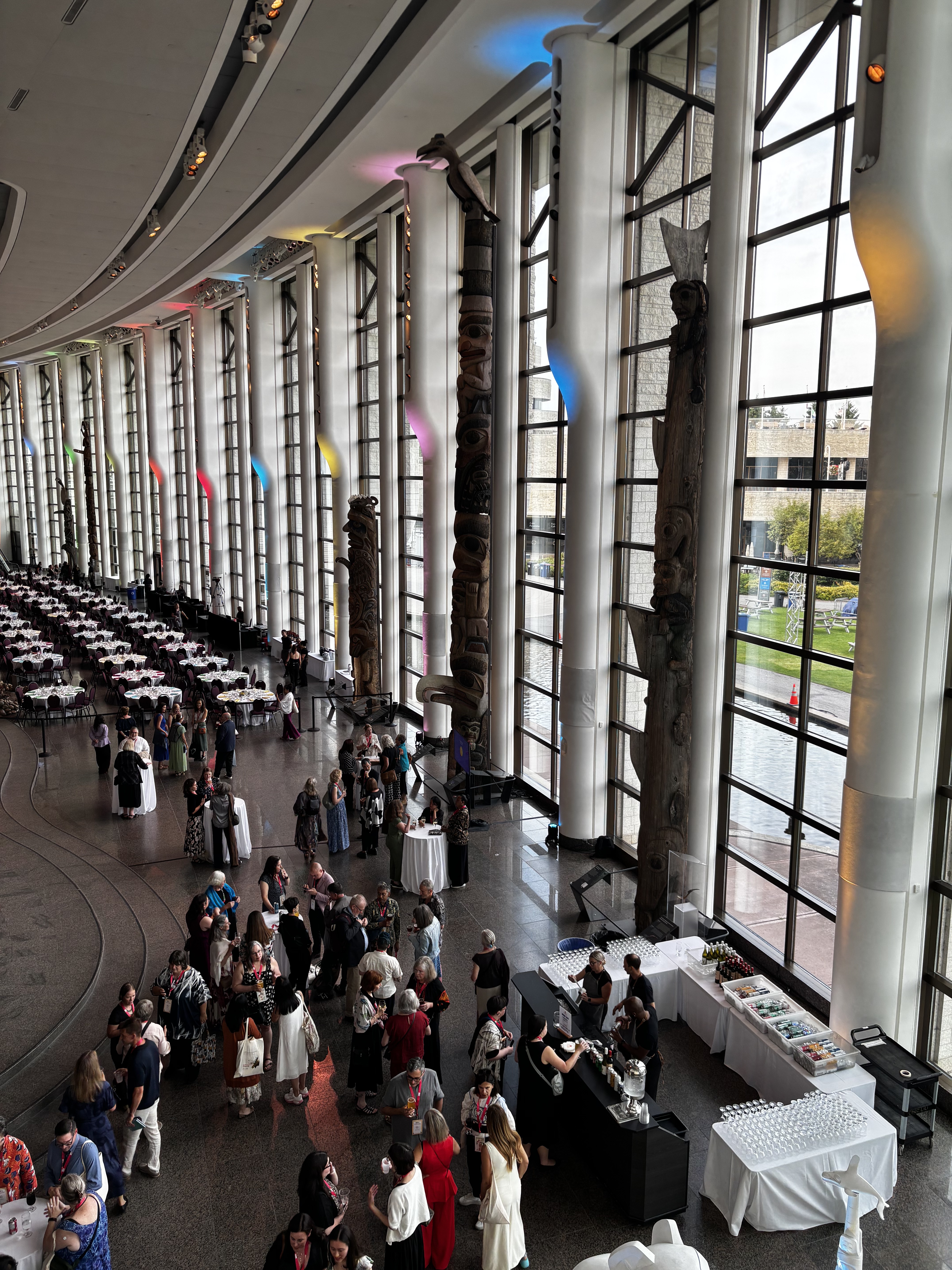
On Friday evening, the congress moved to the Canadian Museum of History for one of its most memorable moments: the Hans Christian Andersen Award Dinner and Awards Ceremony.
The Hans Christian Andersen Award, presented every two years by IBBY, is the highest international recognition given to a writer and an illustrator whose complete bodies of work have made an important and lasting contribution to children’s literature.
This year’s recipients were British writer Michael Rosen and Chinese illustrator Cai Gao.
Michael Rosen’s work has always seemed to understand something fundamental about writing for children: that children deserve to be spoken to with honesty, humour and intelligence.
His writing has also confronted profound subjects, including the death of his son in Michael Rosen’s Sad Book, as well as family history, war and migration in later works.
Cai Gao, this year’s illustrator laureate, represents another kind of storytelling tradition.
Growing up surrounded by preindustrial traditions and her grandmother’s nursery rhymes, she taught herself to draw after being denied a university education.
She eventually became a poster painter and primary school teacher before publishing her first picture book, The Beautiful Garden, in 1980.
Her work reminded me of another recurring theme from the congress: the importance of allowing children to encounter the world through different visual languages and cultural traditions.
Her illustrations don’t simply accompany words.
They create another way of thinking. Of seeing.
And that, ultimately, is what the best picture books do.
And then there was Jon Klassen
After all of the serious conversations about war, displacement, identity, representation and reconciliation, Jon Klassen’s keynote offered a different, and very necessary, kind of wisdom.
His talk was titled “Taking Revenge with Your Creative Work.”
His argument, in essence, was that revenge stories aren’t necessarily about ethics.
They’re about satisfaction.
And perhaps creators need to take revenge on success itself.
Klassen spoke about revenge against characters, revenge against stories, and the strange creative satisfaction of letting something go terribly wrong.
His work often thrives on that tension.
“This Is Not My Hat” is, in many ways, the opposite of a conventional children’s story. We know something the character doesn’t. We anticipate the consequence. We wait.
Klassen’s creative philosophy seemed to be: don’t let go of your revenges.
There was something liberating about hearing this after days of conversations about responsibility.
Children’s literature can carry enormous social weight.
But it is also allowed to be mischievous.
Funny.
Dark.
Uncomfortable.
Absurd.
It is allowed to surprise us.
And perhaps that is part of what makes it powerful.
What I took home
After several days of talks, conversations and encounters with people working in children’s literature across the world, I kept returning to a few ideas.
Stories give us ways to see one another.
They can be acts of resistance.
Of care.
Of love.
And sometimes, they can simply be a place where a child realizes:
I am here.
Someone like me is here.
My story belongs here, too.
That may be the most important work children’s literature can do.
Not to tell children what the world is.
But to give them enough stories to imagine what it could become.


Leave a Reply